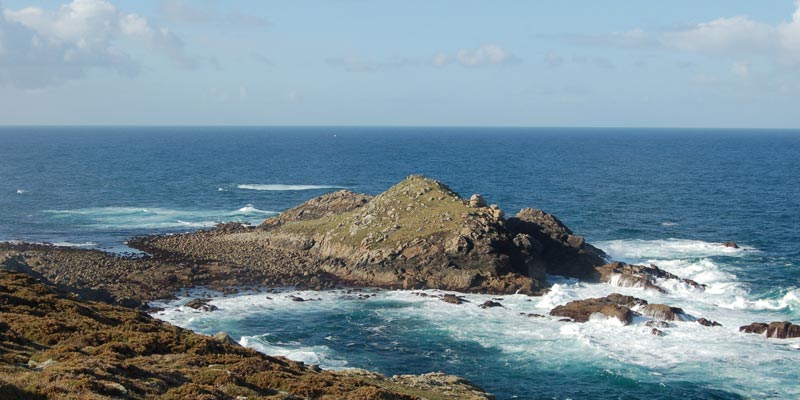
SANTIAGO TO MUXIA - Land's End
Visiting : Santiago, Negreira, Olveiroa, Cee, Fisterra, Lires, Muxia
Duration : 8 Days / 7 Nights
LEVEL OF DIFFICULTY: Medium
For avid walkers, prior training highly recommended. Moderately uneven grade, some dirt and stone roads
(Daily departures – no minimum participant requirements)
Day 1: Santiago de Compostela
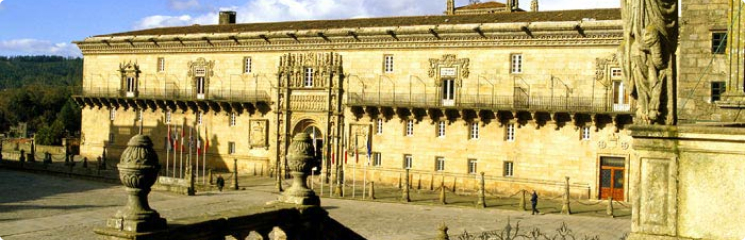
Arrival in Santiago on your own. (Consult with Petrabax for private car transfer prices from Santiago airport or rail station hotel). Your information packet containing complete route descriptions and materials will be waiting for you at your hotel. Santiago´s historical center has been designated a World heritage Site and offers dozens of religious buildings, like the impressive cathedral with Apostle St James sepulchre. Santiago also holds many other tourist possibilities. SUPERIOR CLASS INCLUDES LODGING AT THE PARADOR DOS REIS CATOLICOS.
Day 2: WALK Santiago TO Negreira (21 km / 13 MI)
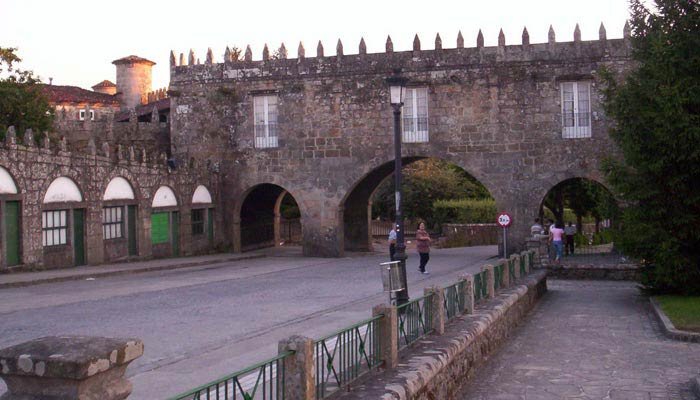
Breakfast. The Fisterra Way departs from the Praza do Obradoiro, Santiago’s most emblematic square, and leaves the city through narrow streets until the oak forest of San Lourenzo. In this stage we could enjoy the peaceful scenery of Ponte Maceira, or the beautiful manor house of A Chancela. Once in Negreira we can visit the medieval fortress of Pazo O Cotón. VALUE PACKAGE INCLUDES DINNER AT YOUR HOTEL THIS EVENING.
Day 3: Transfer Negreira TO KM 10. WALK KM 10 TO Olveiroa (21 km / 13 MI)
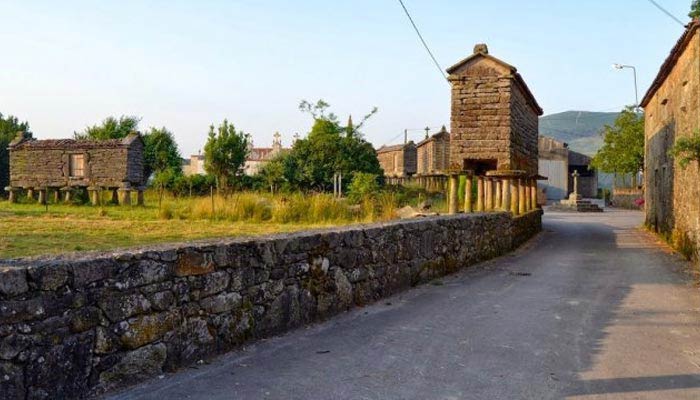
Breakfast.We will take you from Negreira to a point on the Camino located 10 kilometers from it, therefore you will walk 21 km. The landscape in this stage will be composed by meadows and crop fields. We could also admire some examples of traditional architecture, like the hórreos (raised granaries) or the small settlement of Olveira, where today´s route comes to an end. VALUE PACKAGE INCLUDES DINNER AT YOUR HOTEL THIS EVENING.
Day 4: Olveiroa ‐ CEE (19 km / 19.8 mi)
Breakfast. You will abandon Olveiroa and ascend the slope of Monte do Sino, where you will find a wind farm and you will be able to enjoy wonderful views of the course of the Xallas River and the incredible Castrelo - Olveiroa reservoir. You will descend and cross the Hospital River over a small bridge. Shortly after, you will come across the very well signposted fork of the Roads to Fisterra and Muxía. You will continue towards Fisterra and you will leave the Cruceiro Marco do Couto in your wake. You will advance through lakes and trails through the Buxantes Mountains. After passing Ermita da Nosa Señora das Neves you will be able to see the Atlantic Ocean for the first time. You will leave the Cruceiro da Armada in your wake and shortly after you will have spectacular views of the Corcubión Estuary and Cape Fisterra, located at the southern end of the Costa da Morte. A few kilometers further you will find the Church of Santa María de Xunqueira, already in Cee. VALUE PACKAGE INCLUDES DINNER AT YOUR HOTEL THIS EVENING.
Day 5: Cee ‐ Fisterra stage 4: (12 km / 7.4 mi)
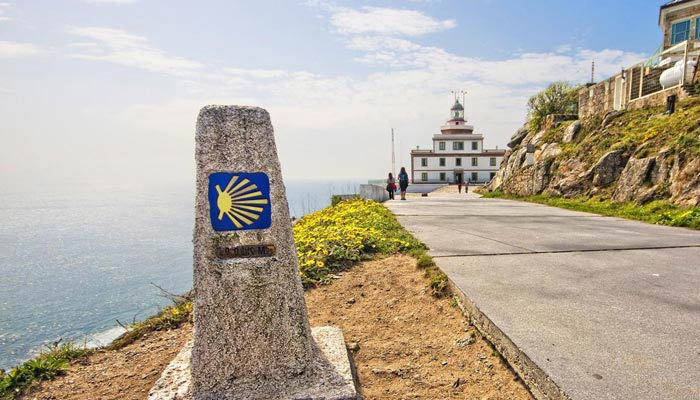
Breakfast. After the sand dunes of the wild Langosteira beach, the pilgrim arrives in the village of Fisterra. On our way to the westernmost point of Europe, we will find the medieval church of Santa María and an unusual contemporary art cemetery. Finally the pilgrim will reach Cape Fisterra, a mythical and symbolic site rich in pagan rituals, where we can admire the sun vanish into the sea. VALUE PACKAGE INCLUDES DINNER AT YOUR HOTEL THIS EVENING.
Day 6: Fisterra ‐ Lires (13 km / 8 mi)
Breakfast. In this stage the sea is ever‐present. Starting at Fisterra the route goes across several hamlets with genuine samples of the rural architecture before getting the wildest beach of O Rostro, and from there to Lires, end of today´s journey. VALUE PACKAGE INCLUDES DINNER AT YOUR HOTEL THIS EVENING.
Day 7: Lires ‐ Muxía (16 km / 10 MI)
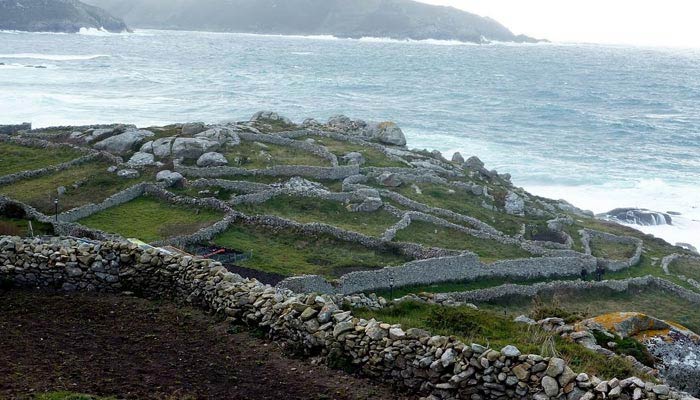
Breakfast. From Lires, the Way ascends up the hillock of As Aférroas with magnificent views to the coast. Before reaching Muxía village, pilgrims can follow the tradition of washing themselves in the Monte Corpiño fountain. Soon after Muxía, we reach the sanctuary of Virxe da Barca, site related to several religious and pagan rituals. VALUE PACKAGE INCLUDES DINNER AT YOUR HOTEL THIS EVENING. SUPERIOR CLASS INCLUDES LODGING AT THE PARADOR OF MUXIA.
Day 8: Muxia
After breakfast, transfer back to Santiago airport or train station and end of our services.
SANTIAGO DE COMPOSTELA
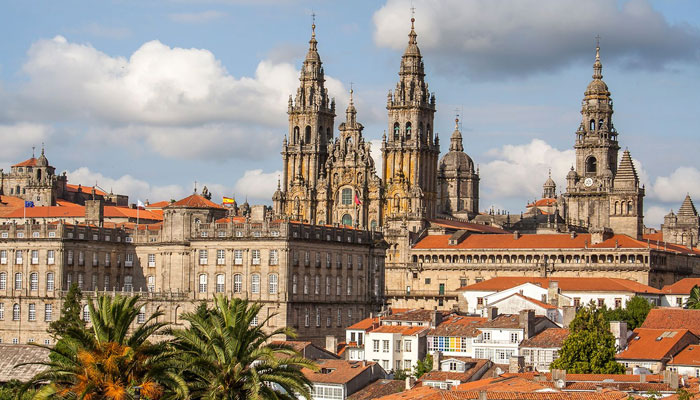
Dicen que Santiago es el pueblo más grande del mundo y, al mismo tiempo, la ciudad más pequeña del planeta. Esta capital gallega combina las comodidades de las pequeñas localidades y las ventajas de las grandes ciudades sofisticadas. Se puede recorrer de una punta a otra en un tranquilo paseo y goza de las comodidades de las grandes capitales. Rincones solitarios y tranquilos y calles bulliciosas de bares de vinos comparten el mismo escenario. El centro histórico, declarado patrimonio de la humanidad por la UNESCO, es la joya de la corona. Construida piedra a piedra alrededor de su majestuosa catedral. El descubrimiento de la tumba del apóstol en el siglo IX transformó este lugar sagrado para siempre.
Negreira
Olveiroa
Corcubion
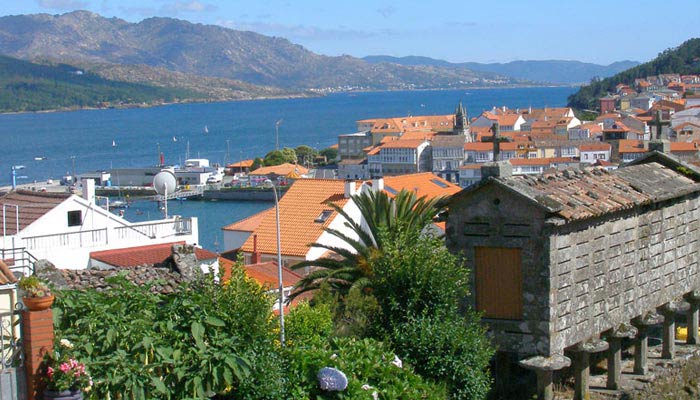
Fisterra
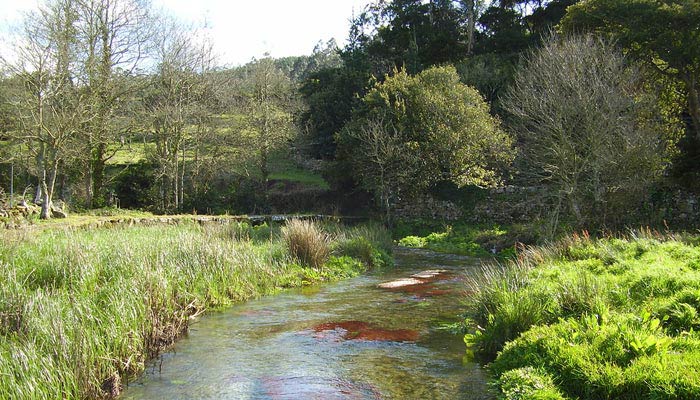
Lires
Muxia
HOTELS COMFORT
Virxe da Cerca, Santiago de Compostela
Casa da Néboa, Negreira
Casa Das Pias, OLVEIROA
Hotel Oca Insua Costa da Morte, Cee
Hotel Vida Finisterre, Fisterra
Casa Jesus, Lires
Hotel Rural As Eiras, Lires
Hotel A De Lolo, Muxia
HOTELS SUPERIOR
Parador de Santiago de Compostela, Santiago Compostela
Casa da Néboa, Negreira
Casa Das Pias, OLVEIROA
Hotel Oca Insua Costa da Morte, Cee
Hotel Vida Finisterre, Fisterra
Hotel Rural As Eiras, Lires
Parador Costa da Morte, Muxia
- Your choice of accommodations in COMFORT CATEGORY: best available hotels, guest houses or rural tourism manor houses with private bath; or in SUPERIOR CATEGORY: Same as Comfort Category except in the city of Santiago where accommodations will be at the deluxe Parador Reis Catolicos or in a hotel of similar category.
- Breakfast daily
- Luggage transportation from city to city while you walk (1 piece, maximum 44 Lbs per person)
- Protection and medical insurance while on tour
- Complete route descriptions and materials
- Local 24 hour telephone assistance while on tour
- Transfer from Muxia to Santiago airport or train station
FREQUENTLY ASKED QUESTIONS:
- How do I arrive to the starting point?
Petrabax can help you arrange a transportation from the closest airport to your starting point. We can also arrange train tickets through Renfe (Spanish Railways) from most Spanish cities. Contact Petrabax for additional information about the best way to arrive to your starting point. - What can I expect from this trip?
You will live an unforgettable experience, away from the bustle of everyday life. This is a trip that you can do in total liberty, on foot or by bicycle, and at your own pace as this is not a race. Your luggage (maximum 1 piece, 44 lbs) will be carried for you from one destination to the next. We provide you with all the necessary expert advice, information and documentation that you require to complete your journey safely: local maps detailing your route, vouchers for your lodgings, tags for your luggage and a travelers notebook for your trip with descriptions on each daily walking or biking route. - What is the “Compostela”?
The “Compostela” is a certificate of accomplishment given to pilgrims that have completed the Camino de Santiago upon presentation of your stamped "Credencial" or Pilgrims Passport. In order to receive the “Compostela” you must complete the last 100 km walking or 200 km cycling. You obtain the “Compostela” at the Office of the Pilgrim located a few meters from the "Platerias" façade of the Santiago Cathedral. - Where do I obtain a Pilgrims Passport?
The "Credencial" or Pilgrims Passport will be provided to you by Petrabax in Spain at the beginning of your trip. It is part of the travel materials and insurance information provided upon arrival to your starting point. - Where do I receive my trip documentation?
You will receive most of your documentation prior to your departure so that you can review it and prepare for your Camino. Other documentation will be delivered at your first hotel. - When can I take this trip?
You can take this trip starting any day of the year. The Camino offers diverse countryside and conditions depend on the season and time of year. Consult the weather of Galicia before arranging your trip. Rainy season is from November through February. March through June and September through October are optimum months for the Camino. The summer months of July and August can be somewhat more challenging due to the warmer weather. - What is the profile of the traveler on this trip?
This trip is suitable to any person who enjoys a normal physical condition. We do however highly recommend that you do some training, especially those persons who are not accustomed to walking or cycling for longer periods of time. - Can I travel with children?
Yes, older children are welcome on the trip as long as they are energetic and accustomed to walking long distances on successive days. - Do I need physical preparation prior to the trip?
Although this trip is suitable for for any person with normal physical condition, we recommend training for a few weeks prior to your trip, especially for those not accustomed to walking or biking for longer distances. We highly recommend taking very comfortable walking/biking shoes that have been previously broken in, so as to avoid blisters, bruises and discomfort. - What items do I need to complete the Camino?
We recommend a light, comfortable weatherproof backpack which you will carry on every stage and that must contain indispensable items for your walk (water bottle, personal documents, a cell phone, snacks, etc. We recommend broken in walking shoes/boots with which you are used to waking, light comfortable clothing, rain gear, a cap or hat, sun screen and sun glasses. During nighttime, warmer clothing such as a sweater or jacket are necessary. A walking stick can help you walk in a more relaxed manner during the more challenging stages. A photo camera and a notebook are also very recommendable. You should always start you day with a hearty breakfast and always take some snacks with you every day such as fruit, dried fruit, energy bar or chocolate. The most important is a full water bottle. - Where does the Camino take place?
The route will take you through many rural country roads and paths as well as local roads with light traffic. On occasions the Camino will take you through roads near larger towns and villages with higher density of traffic. - How is the grade?
There are no major grade changes. The beautiful Galician countryside is filled with mostly mild inclines and declines, valleys and mountains, rivers and streams. It can be said that the Way is relatively easy, it is always very beautiful. The major difficulty could be the total distance covered to complete your route, especially in the colder months (Nov-Feb) or warmer months (Jul-Aug). - Is the Camino dangerous?
Absolutely not. The Camino does not present any danger whatsoever. However, it is recommended that you take the normal safety precautions as you would anywhere else. - Is the Camino well outlined/marked?
You will see many markers along the Camino, they are well positioned and clear throughout the route. Look for the scallop shell which is the symbol of the Camino de Santiago. We also provide you with our travelers notebook in case you have any doubts throughout your journey at any given time. It is very rare to get lost. If you do, there are many places to stop and ask other travelers or the locals for directions. - What services are available along the Camino?
You will find many small hamlets, towns and villages along the Way where you will find all sorts of services: pharmacies, medical services, supermarkets, restaurants, cafes and local tourist offices. In some villages, during the summer you can even swim in the local pool or in the nearby river or creek. You can also find massage services after a long days walk. - How are the dinners?
If you have booked your itinerary with dinner included, these will take place either at your hotel or in a local restaurant nearby the hotel. All dinners include water and wine. They consist of menus containing three plates (appetizer, main dish and dessert). Coffee and tea is normally not included. In some cases the menu will be a specialty menu with a hearty variety of Tapas and local specialties of the region of Galicia. - Is lunch available along the Way?
There are many options available for you to have lunch along the Camino: from sandwiches to drinks to sit-down meals at restaurants or pic-nics on the side of the road, etc. Your travelers notebook contains recommendations for lunch. - What is the starting time for each stage?
We recommend starting early, after enjoying a hearty breakfast, at about 8:30am. The majority of hotels and manor houses offer breakfast service from very early in the morning. In any case you can start your walk according to your wishes. You should normally finalize your stage at or about normal lunch time – this way you can relax and enjoy the rest of the day at your leisure and discover these fantastic towns and villages. - How does the luggage transportation work?
You can only take 1 piece of luggage (max. 44 Lbs/20 Kgs). We will transport your luggage every day from your originating town to the next town while you travel. Your luggage will be waiting for you at your next hotel. You will be provided with special luggage tags for your luggage with your documentation. Please make sure that your luggage is closed and properly locked. - What happens if I’m on the Camino and no longer able to continue?
If you can no longer continue your walk or bicycle, we provide you with support telephone numbers that you may call and we will send a car in a short time to pick you up and take you to the next location. - Can I drink from the water fountains found along the Camino?
Although the water from the fountains along the Camino are usually safe, we do not recommend you drink from them and highly recommend drinking only bottled mineral water.
Petrabax
Petrabax is also a leader in Spanish language escorted tours of Europe, Middle East and the Orient.

Test